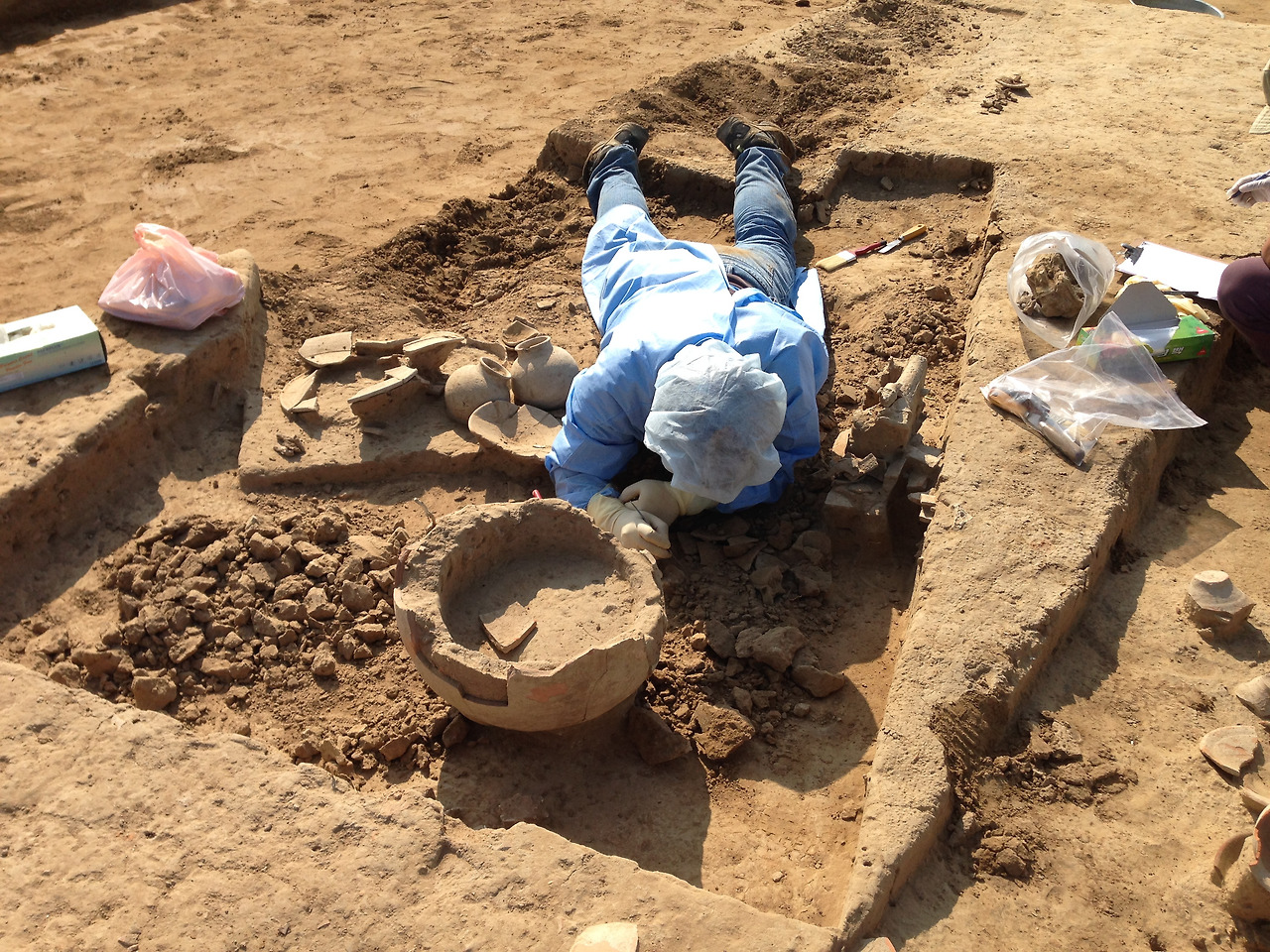
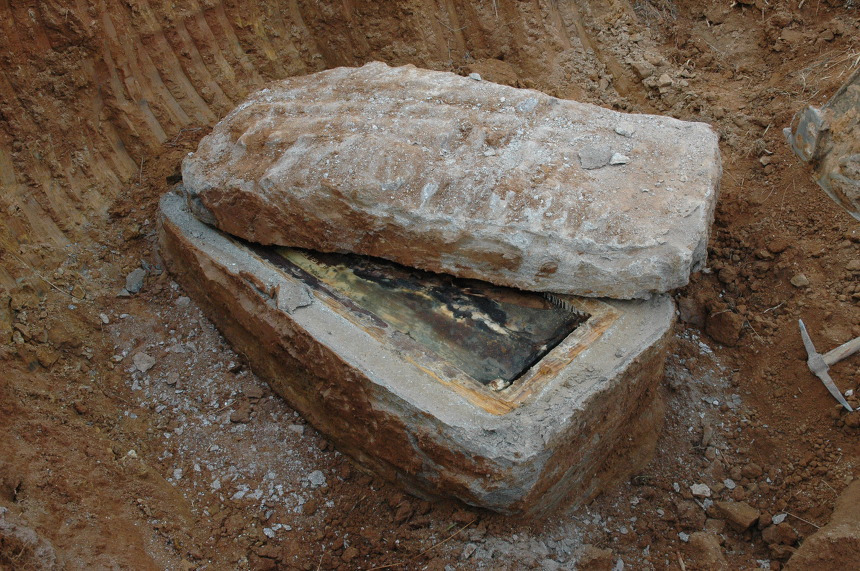
E2024-1. Oh CS, Song MK, Han SH, Kim H, Park JW, Ki HC, Oh K, Kim YS, Kim MJ, Shin DH. 2024. Archaeological and Anthropological Study on the Grave of Eunuch-Official Couple Serving for a Royal Court of Joseon Kingdom. Archaeology, Ethnology & Anthropology of Eurasia. 52/1: 134-144.
E2023-1. Kim JE, Lee HJ, Hong JH, Kenig A, Zaitsera E, Slepchenko S, Kim S, Shin DH. Cross-Analysis of Carbon and Nitrogen Stable Isotope Data from the Remains of Joseon Dynasty Mummies and Other Agrarian People of 16th to 18th Century Eurasian Continent. Journal of Archaeological Science: Reports. 2023. 47: 103732.
E2021-1. Lee, H., Song, M.K., Nam, K.-M., Kim, H., Park, J.-W., Cha, S.C., Kim, J., Hong, J.H., Kang, R.-J. and Shin, D.H., 2021. Archaeological and Anthropological Investigation in Case of Urgent Time Constraints of Rescue Archaeology in South Korea. Ancient Asia, 12, p.4. DOI: http://doi.org/10.5334/aa.231
K2019-2. 오창석, 신동훈, 김용근, 박준범. 인류학적 조사 후 옛 사람 유해를 유족에게 반환한 사례에 대하여. 해부생물인류학. 2019. 2019 Jun;32(2):77-82. (Korean)
E2018-2. Oh CS, Kang IU, Hong JH, Park JB and Shin DH. An Experiment Assessment of the Cause of Mummification in Joseon Period Burials, Republic of Korea. Archaeology, Ethnology & Anthropology of Eurasia. 2018. 46(1) 117-122.
E2018-6. Oh CS, Hong JH, Park JB, Lee WJ, Bianucci R, Piombino-Mascali D, Shin DH. From excavation site to reburial ground: a standard protocol of mummy studies in South Korea. Asian Journal of Paleopathology. 2018; 2, 1-8.
E2018-14. Shin DH, Bianucci R, Fujita H, Hong JH. Mummifications in Korea and China: Mawangdui, Song, Ming and Joseon Dynasty mummies. Biomed Research International 2018: 6215025.
E2017-3. Yi Suk Kim, Myeung Ju Kim, Jong Ha Hong, Chang Seok Oh, Raffaella Bianucci, and Dong Hoon Shin. The Scientific and Ethical Background of the Invasive Studies on the Korean Mummies of the Joseon Dynasty. 2017. Asian Journal of Paleopathology. Vol. 1, pp. 5-11.
E2017-6. Oh CS, Kang IU, Hong JH, Slepchenko S, Park JB and Shin DH. Tracing the historical origin of Joseon mummies considering the structural similarities between the burial systems of Korean and Chinese dynasties. 2017. Papers on Anthropology. XXVI/2, pp. 68–81.
E2015-8. Moissidou D, Day J, Shin DH and Bianucci R. Invasive versus non-invasive methods applied to mummy research: will this controversy ever be solved? 2015. BioMed Research International, Article ID 192829.
E2014-3. Song MK and Shin DH. Joseon mummies before bioanthropological studies began in Korea. Papers on Anthropology XXIII/1, 2014, pp. 117–134.
E2014-8. Oh CS and Shin DH. Making Animal Model for Korean Mummy Studies. Anthrop Anz. 71/4 (2014), pp. 469–488.
E2013-4. Lee EJ, Oh CS, Yim SG, Park JB, Kim Y-S, Shin MH, Lee SD, Shin DH. Collaboration of archaeologists, historians and bioarchaeologists during removal of clothing from Korean mummy of Joseon dynasty. International Journal of Historical Archaeology March 2013, Volume 17, Issue 1, pp 94-118.
E2009-4. Lee EJ, Shin DH, Yang HY, Spigelman M, Yim SG. 2009. Eung Tae’s tomb: a Joseon ancestor and the letters of those that loved him. Antiquity 83(319):145–156.
K2009-1. 신동훈, 오창석, 박준범, 김명주, 복기대. 해외연구동향에 비추어 본 조선시대 회곽묘 출토 한국미라연구 현황. 동양학 2009; 46: 243-267.
E2006-1. Kim MJ, Park SS, Bok GD, Choi YH, Lee IS, Shin KJ, Han GR, Youn M, Han SH, Kang IW, Chang BS, Cho YJ, Chung YH and Shin DH. Medieval mummy from Yangju. Archaeology, Ethnology and Anthropology of Eurasia.2006.28(1) 122-129.
E2006-7. Kim SB, Shin JE, Park SS, Bok GD, Chang YP, Kim J, Chung YH, Yi YS, Shin MH, Chang BS, Shin DH, Kim MJ. 2006. Endoscopic investigation of the internal organs of a 15th-century child mummy from Yangju, Korea. J Anat. Nov;209(5):681-8.